News & Updates
World’s robotics leaders to gather in Germany in race to put AI to work
Ian Copeland Mon, Nov 23, 2026
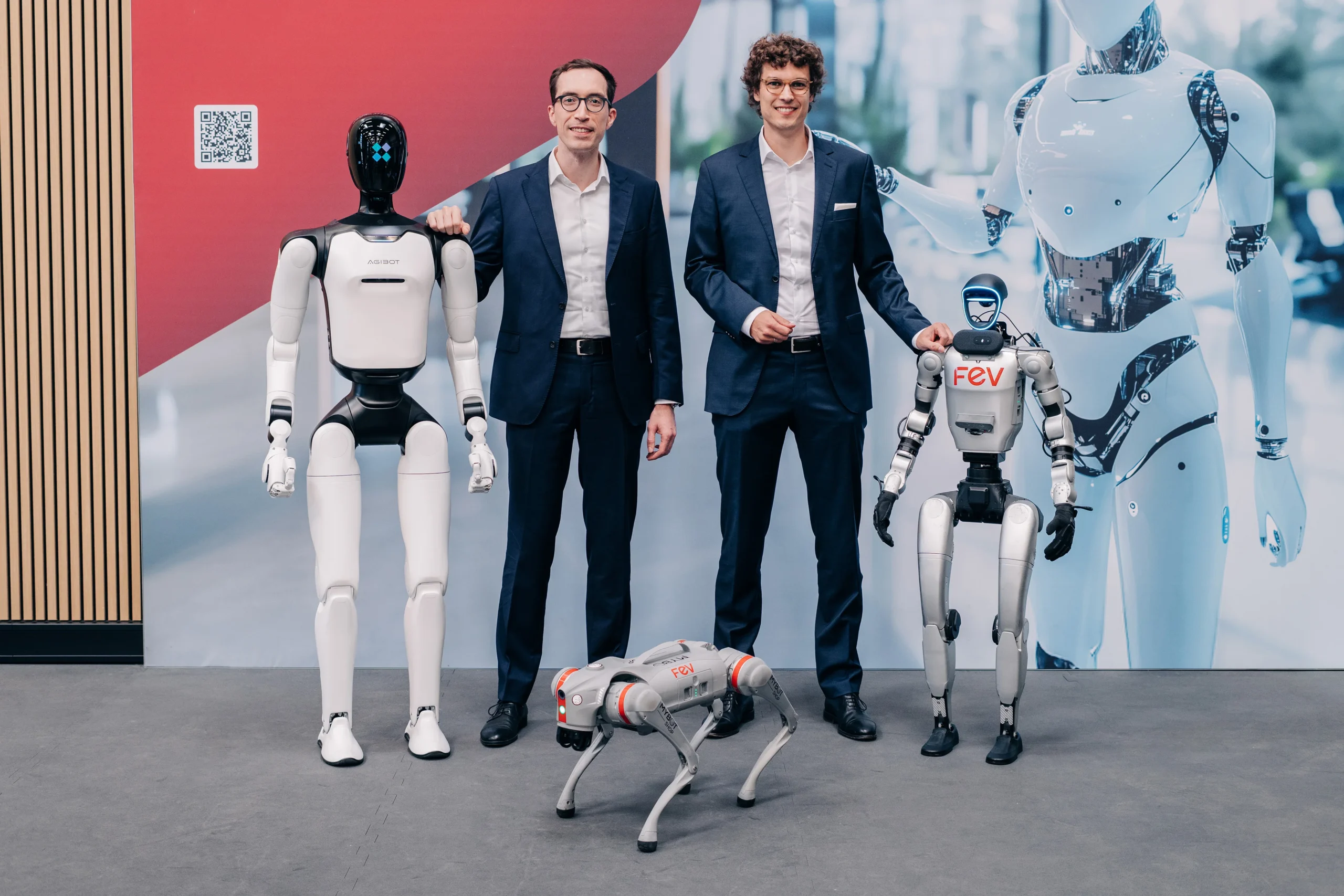
Some of the world’s leading robotics and AI firms will gather in Germany next week for a major international conference aimed at bringing humanoid robots out of the laboratory and into everyday industrial use.
The Advanced Robotics Conference 2026 (ARC) will bring together technology developers, manufacturers and researchers to examine how the latest generation of intelligent machines can be made reliable, safe and affordable enough for widespread commercial deployment.
Nine different robotic systems will be demonstrated, including humanoid machines from Chinese manufacturers Unitree and AGIBOT, four-legged robots, mobile platforms and intelligent robotic arms.
Hosted by German engineering group FEV, the two-day event will examine physical AI, which allows machines to interpret and respond to their surroundings, and the technical advances needed to make increasingly autonomous robots practical for factories and other workplaces.
Among those taking part are experts from NEURA Robotics, Hugging Face, Schaeffler, Infineon Technologies, Humanoid, Synapticon, Wandelbots, Enchanted Tools, Sereact and the Fraunhofer Institute for Manufacturing Engineering and Automation.
The programme will cover robots capable of learning new tasks, advances in sensors and control systems, and the challenge of integrating intelligent machines into existing industrial operations.
Europe’s ability to compete in the developing global humanoid robotics market will also be examined at the event held in Aachen on 25 and 26 November.
Dr Dominik Lückmann, the chief innovation officer at FEV Group, said: “The value of a robot ultimately depends on its ability to perform a specific task reliably and at an economically viable cost.
“To achieve this, artificial intelligence, hardware, and system integration must work together seamlessly.”
Investment in humanoid robotics has surged, with $2.65 billion invested in start-ups worldwide in 2025, according to figures reported by the International Federation of Robotics.
But despite the investment, commercial adoption remains limited, with manufacturers still confronting problems involving cost, reliability, dexterity and safety.
Many advanced humanoid systems remain in development or are undergoing industrial trials, experts say.
Lückmann added: “With ARC, we bring together developers, suppliers, and end users to discuss the key challenges that need to be overcome for the widespread adoption of humanoid robotics.”
For this and other MICE events in Germany, you can book them on www.micegermany.de today!
More articles for you
Why Germany for Corporate Events and Icentive Travel?
Wed, Nov 25, 2026 5 Mins
New regulations could make trade fair appearances in the USA more difficult
Fri, Nov 20, 2026 1 Mins
Networking with Purpose & Impact – Connecting teams efficiently and strengthening collaboration
Thu, Nov 19, 2026 4 Mins
Conference Hotels and Meeting Rooms in Hamburg – Secure the Best Locations Now
Wed, Nov 18, 2026 2 Mins
Hamburg: The Most Dynamic Districts for Meetings, Workshops & Corporate Events
Tue, Nov 17, 2026 3 Mins
Hyper-personalization & micro-destinations: The new precision in the MICE sector
Mon, Nov 16, 2026 2 Mins